MarcusTech.

Developer tools for independent builders

Your workflow.
Within reach.

MarcusTech builds Relay, an Android app that lets independent developers and small teams reach AI coding sessions, transcripts and model conversations from their phones, and the infrastructure behind it: thoth-server, a Go model gateway, and Loki, a Go coding agent. thoth-server and Loki call Claude Haiku, Sonnet and Opus 5.5 directly through the Anthropic Messages API; Relay uses Claude through those two, for chat and for remote coding sessions. Each integration has been exercised on live requests.

Also in development: Asset Forge, a pipeline for image, 3D and video assets.

Rust · Go · Dart / Flutter · PythonEstablished March 2026 · South Korea · Active development
MOBILE WORKFLOWRELAY + LOKI + CLAUDE
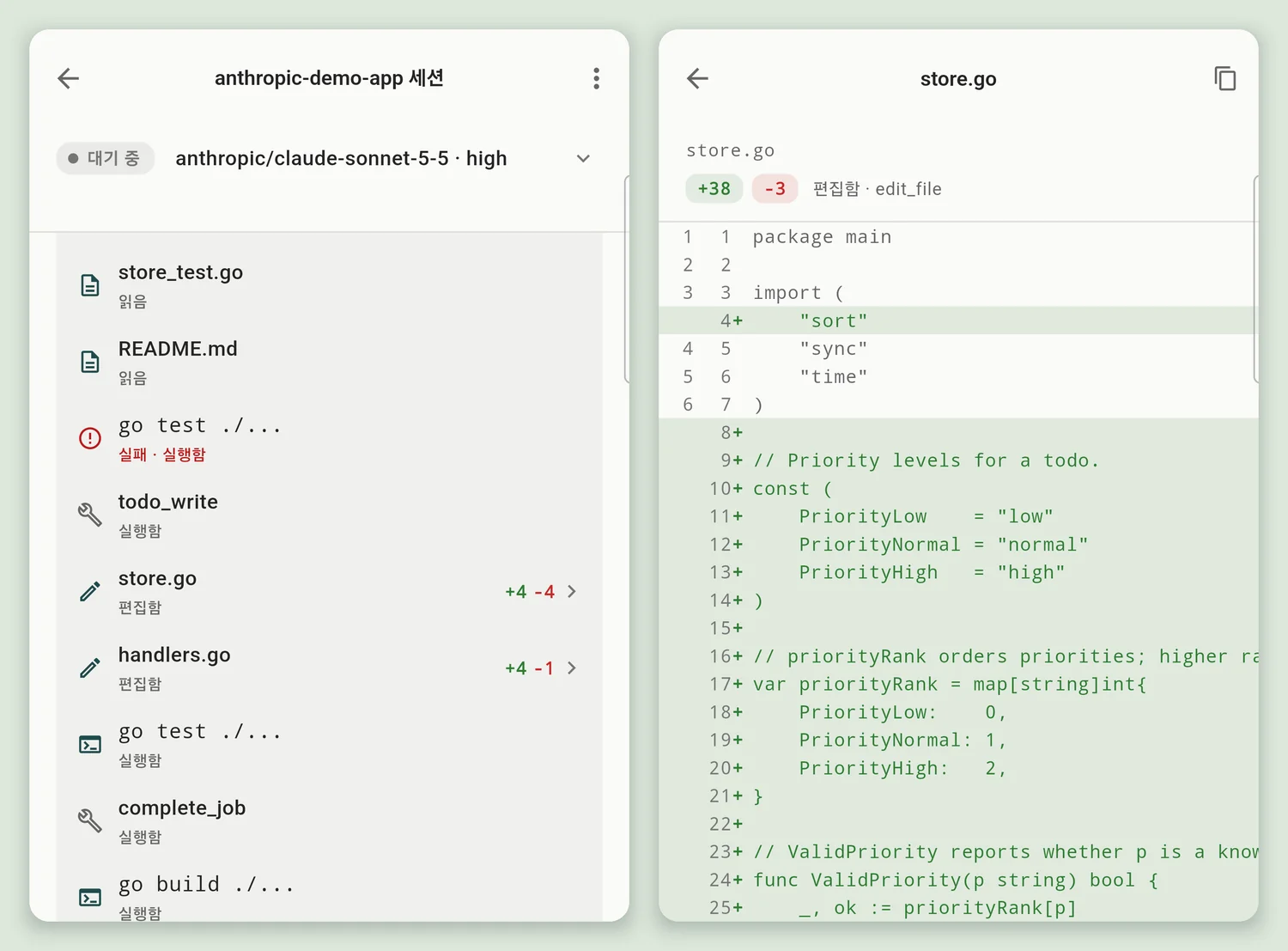
Two Android phone screens from Relay, side by side. Left: the tool list of a Claude Sonnet 5.5 session at high effort, with a failed go test, edits to store.go and handlers.go, and passing go test runs. Right: the diff of store.go, +38 −3, adding priority constants and a ValidPriority function. The app interface is in Korean.
RELAY / REMOTE LOKI SESSIONFix, implement, test, from the phone.
Claude Sonnet 5.5 · high effort18 tests pass5 files +208 −14

A small demo Go project, one run, 10 Oct 2026. The app interface is in Korean.

01 / Developer workflow02 / Model access03 / Native tools

OUR PRODUCTS

Tools for your
development workflow.

For independent developers building software with AI. Our products are in active development, with Relay at the center of the mobile workflow.

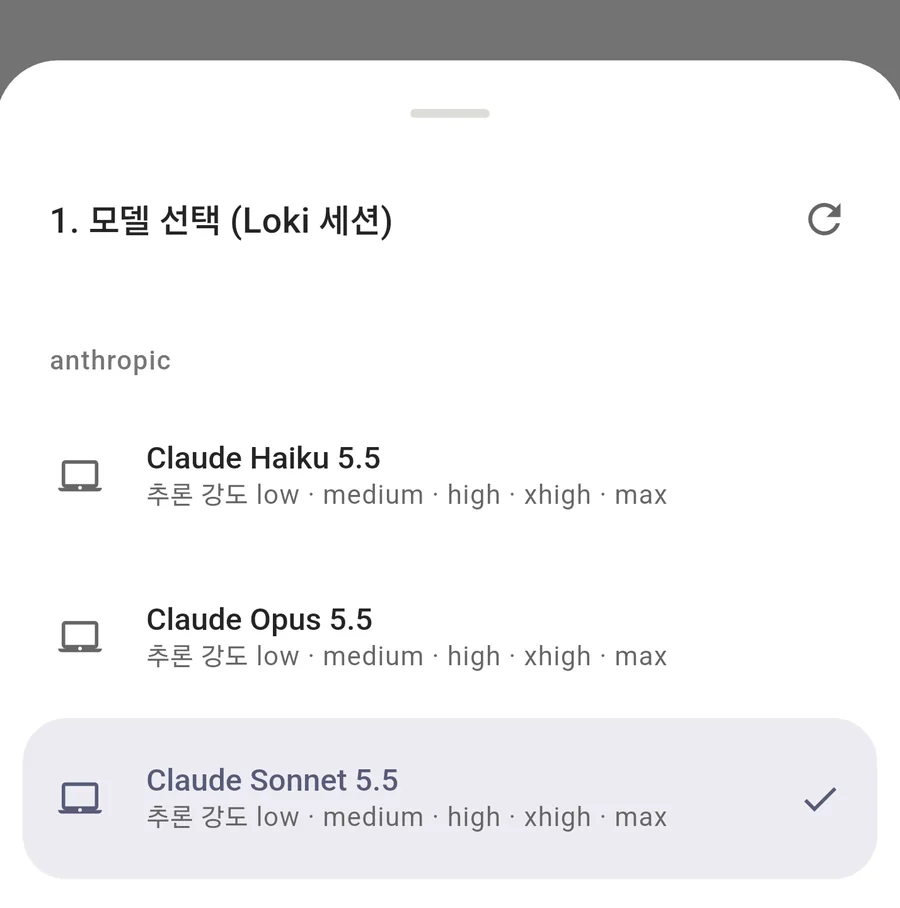
Relay model picker on an Android phone listing Claude Haiku 5.5, Claude Opus 5.5 and Claude Sonnet 5.5 under the anthropic provider, each with the reasoning steps low, medium, high, xhigh and max; Sonnet 5.5 is selected. The app interface is in Korean.
Three Claude models, five reasoning steps each. Click to enlarge.
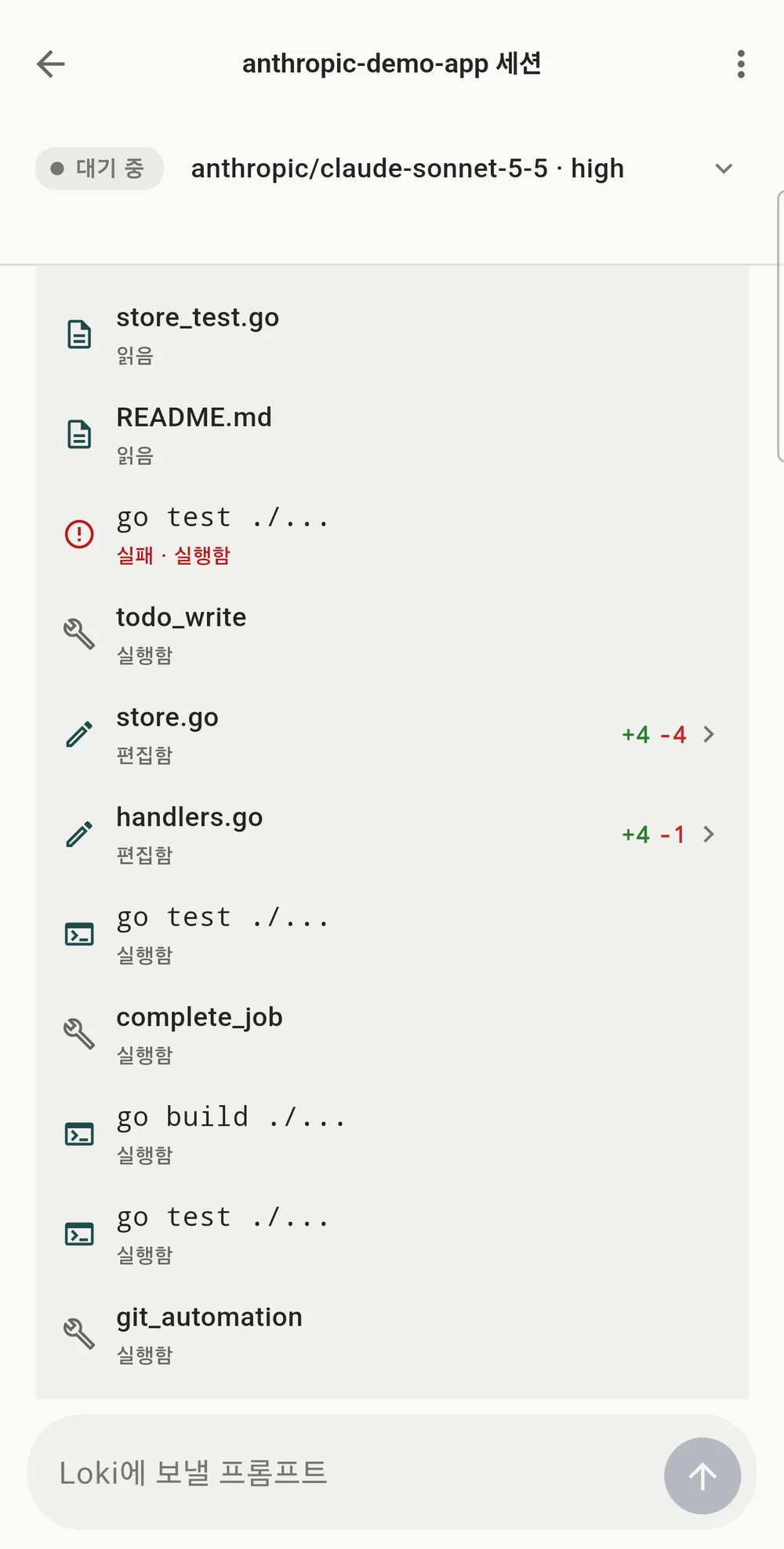
Relay tool list of a Claude Sonnet 5.5 session at high effort: a go test run that failed, then edits to store.go (+4 −4) and handlers.go (+4 −1), then further go test and go build runs. The app interface is in Korean.
A failing test, then the fix. Click to enlarge.
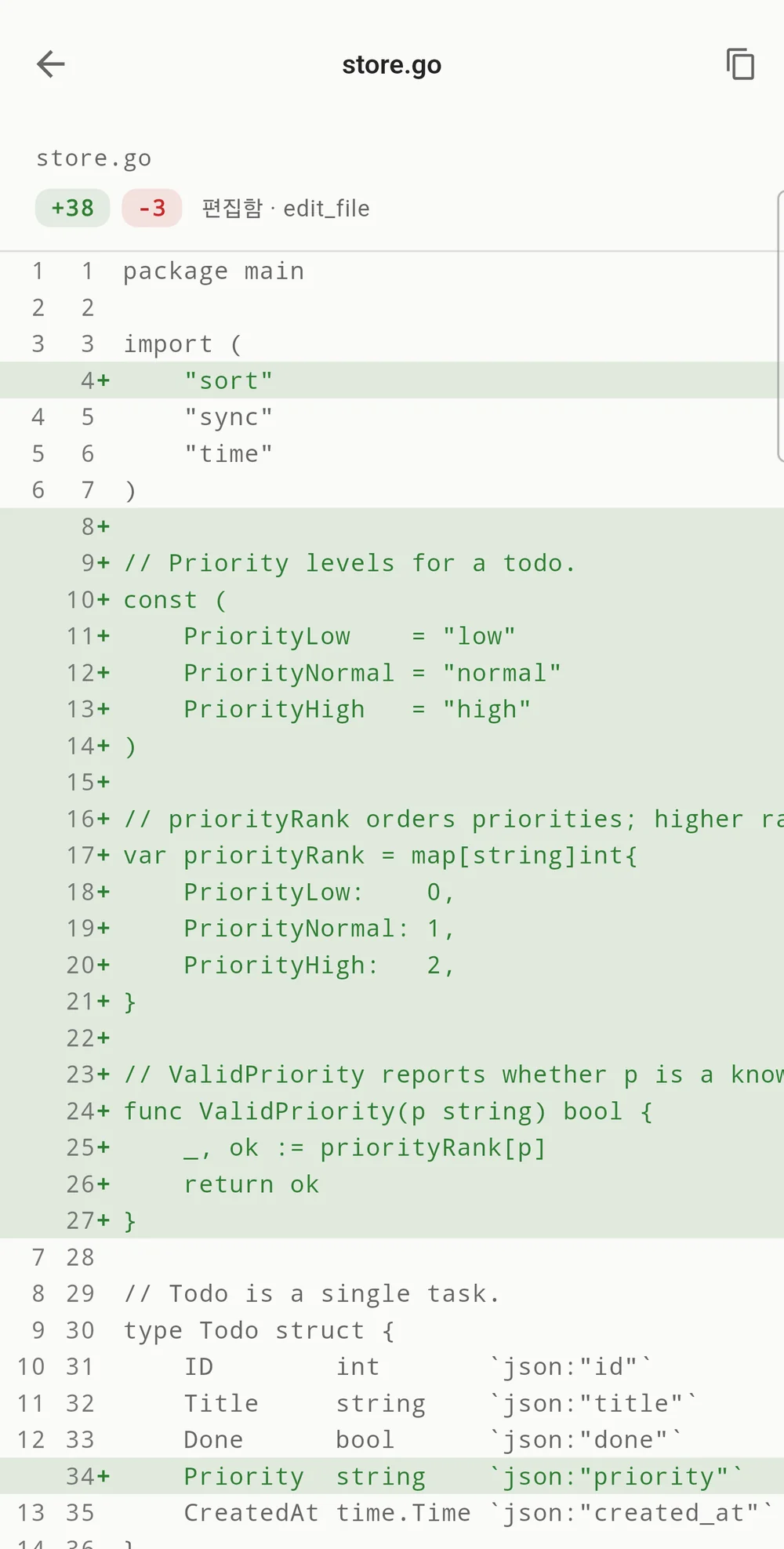
Relay diff view of store.go, +38 −3: the new priority constants, the priority rank map and the ValidPriority function, with added lines highlighted in green. A long comment line is cut off at the right edge of the phone screen.
The diff, on the phone. Click to enlarge.
01 / MOBILE WORKFLOWIn development

Relay

Claude Haiku, Sonnet and Opus 5.5 are available in Relay’s model picker, for chat and for remote coding sessions, from your phone.

Driven from a phone through Relay, Claude Sonnet 5.5 at high effort fixed 2 failing tests and implemented a priority field in a small demo Go project (7 files); 18 tests pass. The run took about 1 min 30 s and changed 5 files, +208 −14. You can pick any of the three Claude models and a reasoning step from low to max, cancel a running task, and switch the session’s model from the phone. Other providers remain in the code but are hidden in the current builds.

Screenshots from a physical Android phone, 10 Oct 2026. The app interface is in Korean; Claude’s replies are in English. The demo project is a small one made for this test, and this was one run, not a benchmark. The Mac’s hostname is redacted.

Dart / FlutterRiverpodSSEClaude 5.5
Technical approach +

Flutter, Riverpod and custom SSE handling provide model controls, conversation streaming and resume offsets. Remote views expose machines, projects, sessions and transcripts.

Claude integration: chat requests go through thoth-server’s Anthropic provider, and remote sessions run on Loki through the connector. The reasoning steps shown for each Claude model are the ones verified on live requests.

Engineering notes ↗

Android / Flutter · Remote sessions & model conversations
IMPLEMENTATION MAPA route is a decision.
RequestEligibility gatesOrdered provider choiceAttempt & usage records
02 / MODEL INFRASTRUCTUREIn development

thoth-server

A Go gateway for model routing and provider accounting, now with direct Claude access.

Route model requests through explicit eligibility rules and record every provider attempt in SQLite. An Anthropic Messages API provider translates OpenAI-style requests and streams for Claude Haiku, Sonnet and Opus 5.5, registered manual-only because billing is pay-per-token.

GoSQLiteHTTP / JSONAnthropic Messages API
Technical approach +

Liveness, modality, context and circuit-breaker gates are separate from ordered provider selection. The service also implements scoped credentials, budgets and provider-specific reasoning parameters.

Claude integration: the provider converts requests and SSE streams in both directions, and Claude routes reuse the existing attempt records, eligibility gates and circuit breaker. Each model’s reasoning steps (low to max) are the ones verified by live requests: 15 requests, all HTTP 200, while an invalid step returned 400 (9 Oct). The older OpenCode Go Claude route is separate and hidden.

Tests: 196 top-level Go tests pass on the feature branch (go test ./... -count=1, 10 Oct 2026).

Engineering notes ↗

Go / SQLite · Model routing infrastructure

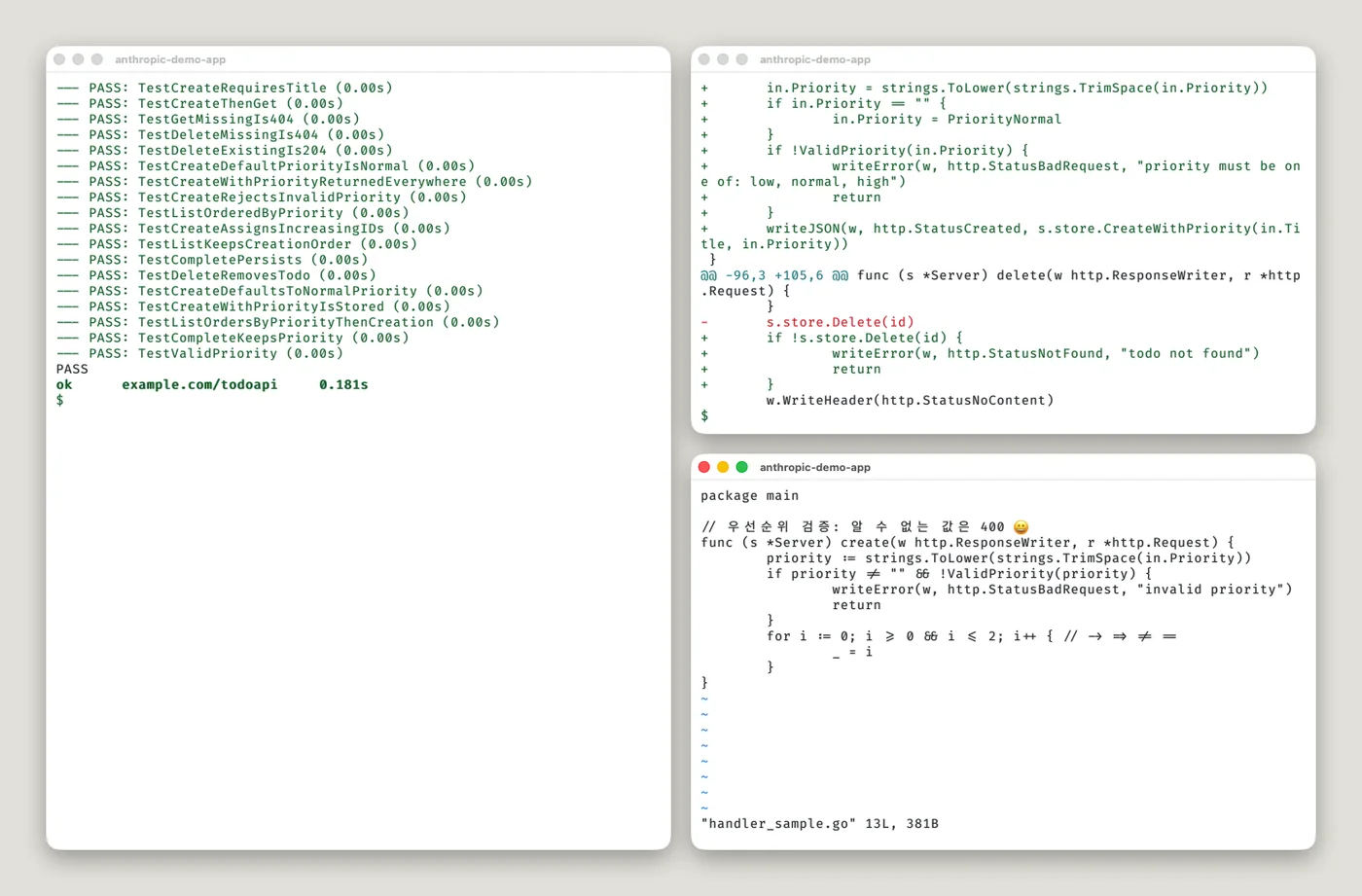
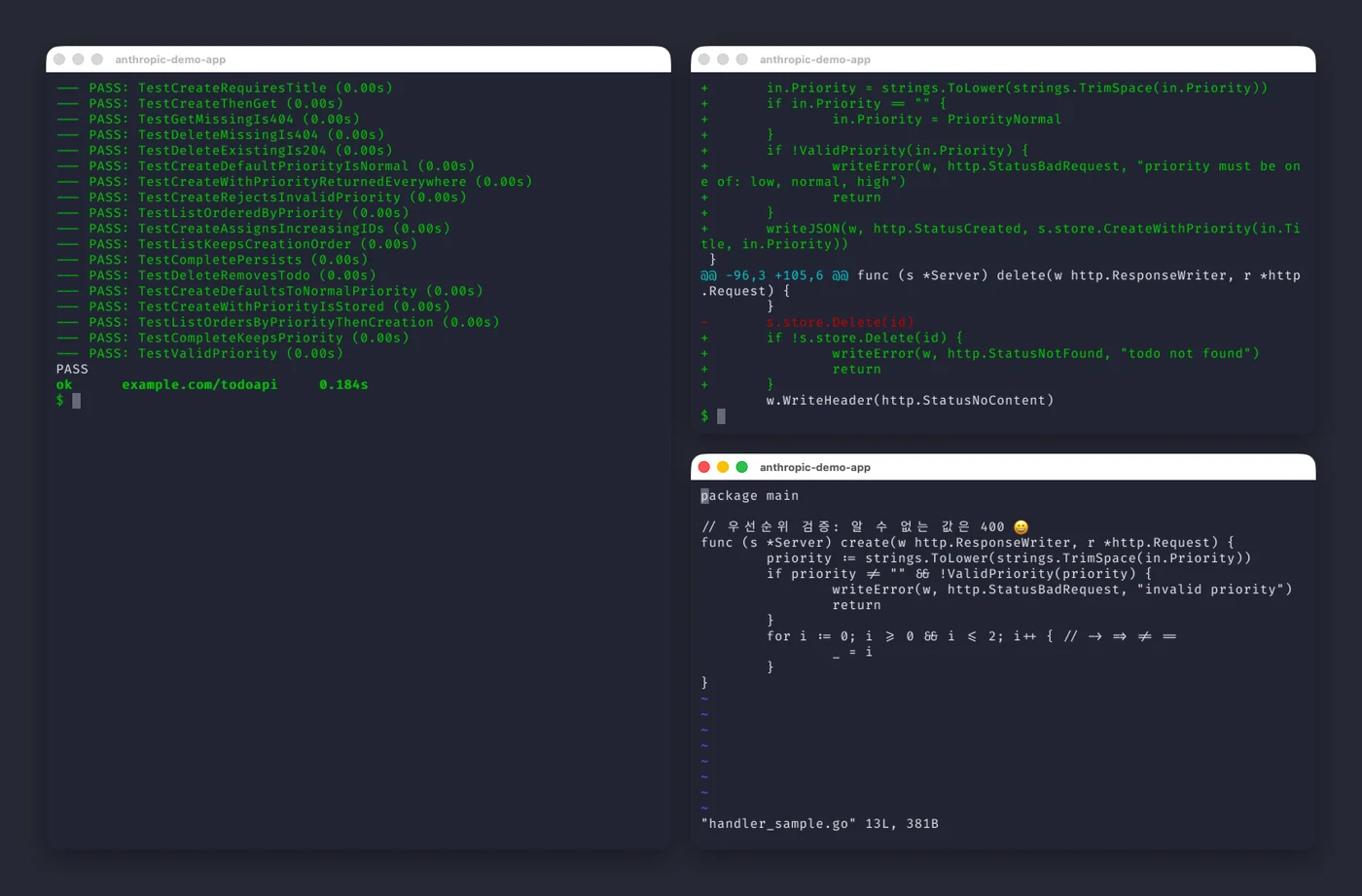
Three Ember terminal windows with the dark theme: go test output with 18 passing tests, a coloured git diff, and a vim window showing Korean text, a colour emoji and programming ligatures.
Dark theme: test output, a coloured diff, and Korean text, emoji and ligatures in vim. Click to enlarge.
The same three Ember terminal windows with the light theme.
The same windows in the light theme. Click to enlarge.
03 / NATIVE DEVELOPER TOOLSIn development

Ember

A native macOS terminal, built in Rust.

GPU rendering (source-backed; Metal on this Mac), programming ligatures, CJK text, colour emoji, dark and light themes, and multiple windows. The three windows shown run the tests, a coloured git diff of the change Claude made, and a Korean and emoji text sample.

Captured 10 Oct 2026 from a build of the current source; each window was captured on its own. The PASS/FAIL colours come from a small awk filter, because go test prints no colour.

Rustwgpu / winitPTY / VTE
Technical approach +

A PTY session feeds a terminal grid rendered with wgpu. Text shaping, glyph caching, ligature handling and font hot reload are implemented in Rust.

Product direction: packaging, onboarding and measured rendering improvements.

Engineering notes ↗

macOS / Rust · Native terminal development

BUILT WITH CLAUDE

Claude across
our developer tools.

thoth-server and Loki call Claude Haiku, Sonnet and Opus 5.5 directly through the Anthropic Messages API, and Relay uses Claude through those two. The table lists what we ran, when, and the result. Each row is a single run or measurement, not a benchmark.

Built with Claude Code

The Claude integration work in Relay, thoth-server and Loki was developed with Claude Code: 10 commits, 63 files changed, +5,128 −349 lines across the three repositories (feature branches, 9–10 Oct 2026, from git history). All 10 commits carry a Co-Authored-By: Claude trailer. This homepage was edited with Claude Code as well. Per-repository numbers ↗

What we ran with Claude
ItemDateResult
Reasoning steps, three models9 OctHaiku, Sonnet and Opus 5.5 each accepted all five steps (low to max) on live requests: 15 requests, all HTTP 200. A step that does not exist returned 400. Evidence ↗
Relay chat, Sonnet 5.59 OctSonnet 5.5 at the high step streamed a complete answer to a physical Android phone: HTTP 200, 31.7 seconds. Evidence ↗
Relay remote session driving Loki10 OctClaude Sonnet 5.5 fixed 2 failing tests and added a priority field in a small demo Go project: 18 tests pass, 90 seconds, 5 files changed, +208 −14. Evidence ↗
Loki on its own10 OctSonnet 5.5 implemented a string parser from a written spec: 33 tests pass, 46.9 seconds, about $0.46 in API usage. Evidence ↗

Loki on its own: the acceptance test was written before the run and the test file was left unmodified; the run took 11 turns. The full suite has known failures, recorded in the verification notes. Research and verification notes ↗

Also in development

  • Asset Forge: a Go core with durable job state for image-to-3D and image-to-video worker integrations.
  • Asset Studio: a browser interface for reviewing game-asset candidates, with provenance and license checks.

PRODUCT DIRECTION

Where Claude support
goes next.

These four items come from the limits recorded in our verification notes. There is no committed release date.

  1. 01

    Prompt caching

    Planned, to avoid paying the full input price on repeated context. Not used yet in thoth-server or Loki.

  2. 02

    Streamed thinking

    Planned. The adapters handle thinking blocks, but we have not yet observed a thinking stream in live calls.

  3. 03

    Clearer cancellation while a tool is running

    Planned. Cancelling while a tool is running currently shows as an error instead of “cancelled”; the cause is identified.

  4. 04

    Opus 5.5 coding evaluation

    Planned. Opus 5.5 has been selected and its reasoning steps verified, but it has not been evaluated on coding tasks.

ABOUT MARCUSTECH

Independent company.
Focused product development.

MarcusTech is a one-person company (a registered sole proprietorship, registered in Korea as 마커스테크) founded in March 2026 in South Korea by a software developer with more than 15 years of professional experience. We build developer tools for independent developers and small teams: a mobile app for AI coding sessions, a model gateway and a coding agent, all integrated with Claude.

Discuss a project contact@marcustech.app